



Rails, Ferries & Waterfronts: Riding the Cataraqui Kingston Wolfe Cruiser
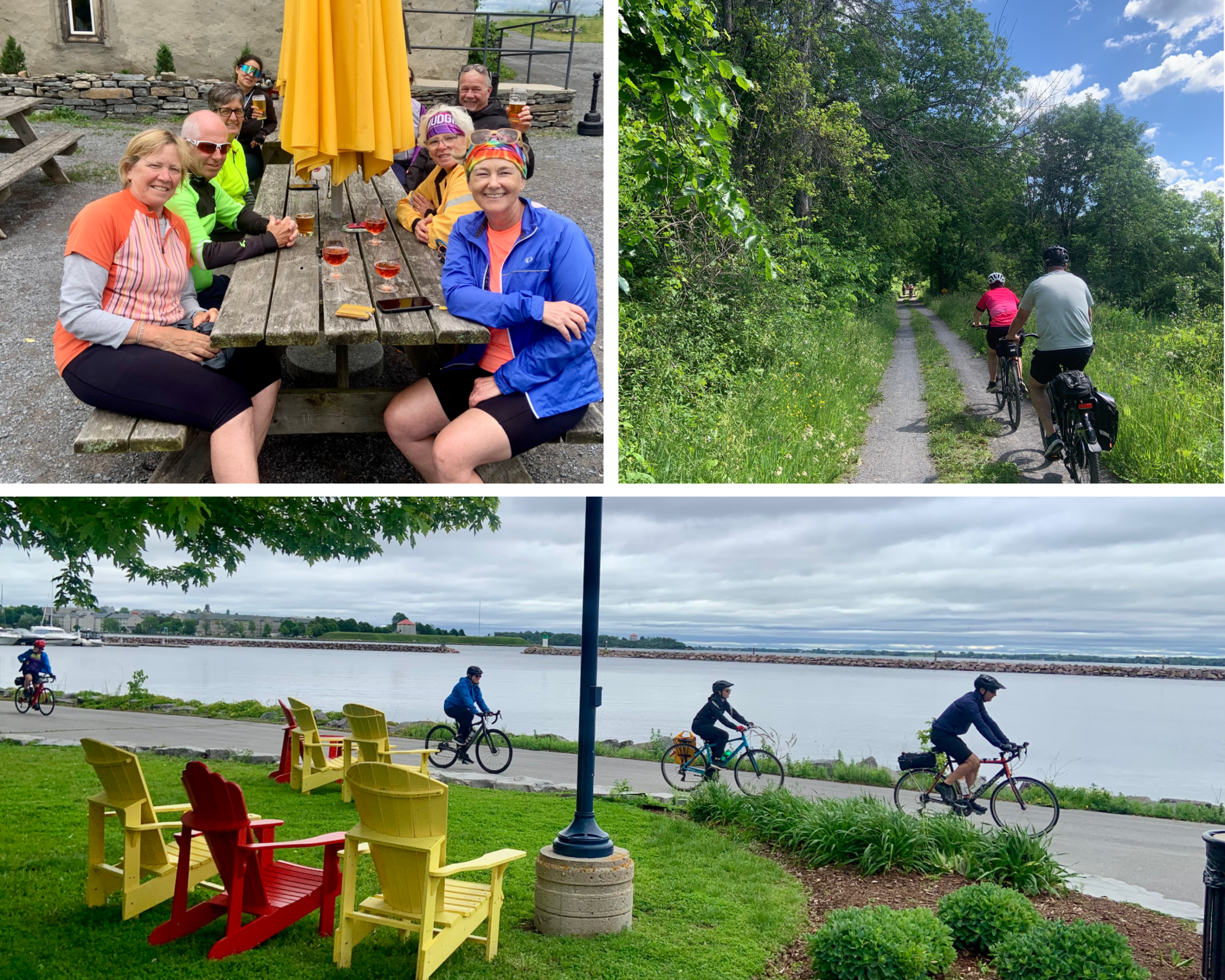
On a bright and cheery morning, we set out westbound along the waterfront in downtown Kingston. Bellies full from the hotel breakfast spread. Faces a little rosey from the sun two days earlier. Bodies slightly sore from the previous day’s riding, but in the good way that reminds you of the strength you possess. Nevertheless, we had stretched, fuelled up and were eagerly ready for the day ahead.
That is the feeling I remember most from the third day of the Ontario By Bike Cataraqui Kingston Wolfe Cruiser. I had joined the group for only the second time, slightly apprehensive about taking on three consecutive days in the saddle. Looking back now, I am glad I did. It was a ride I know I will repeat, one I will tell friends about, and one that has already settled into the category of rides that come with fond memories.
The June 2026 ride covered roughly 160km over three days, combining rail trails, quiet country roads, waterfront riding, a ferry crossing and a full day exploring Wolfe Island. Kingston served as our home base for two nights, giving us the luxury of leaving overnight bags behind and heading out each morning with only what we needed for the day’s adventure.
Day One: Rails, Forests and a Ride into Kingston
Our adventure began in Napanee, where a short warm-up through town led us toward the Cataraqui Trail. After those first kilometres on the road, the landscape changed almost immediately.
The Cataraqui Trail is a 104km shared-use trail stretching between Smiths Falls and Strathcona, following a former railway corridor through Eastern Ontario. For our route, it offered a long, largely flat stretch through agricultural land, wetlands and forest.
The change in pace was noticeable. The road disappeared behind us and suddenly we were riding beneath a canopy of green, the surface changing to well-maintained gravel and stone dust. Every so often the trees opened up. Sunlight spilled across the trail and a glimpse of water, marshland, or a field appeared before the greenery closed in again.
It was the kind of riding where conversation comes easily.
Along the way, we passed walkers, cyclists and people out enjoying the trail with their dogs and children. At one point, we pulled over to the side as a group of horseback riders came toward us. We exchanged the usual greetings as we passed, until one horse decided it was time for a rather unexpected pit stop. The rider waited patiently while the rest of us tried not to laugh. For a few minutes, we were all simply part of the same little trail community.
After lunch in Harrowsmith, we continued along the trail before turning onto the K&P Rail Trail. The K&P follows the former Kingston & Pembroke Railway and now forms part of a much larger multi-use trail corridor through Eastern Ontario. This Frontenac County section is a stone-dust rail trail winding through forests, lakes, wetlands and rural communities.

And this is where the scenery began to change. The open agricultural landscape gave way to taller forests and the unmistakable smell of pine. The sky seemed bigger above us, while the trees grew closer on either side. We had been riding at an easy pace for some time when the trail suddenly seemed to quiet even further.
If there is one moment that stands out from that first day, it is this one. The trail had been gently descending for a while when we rounded a bend and found ourselves between rock faces draped in thick, drooping moss. The sound of the wind seemed to brush past my ears as we rolled through. Grooves and cracks in the rock disappeared beneath layers of soft green growth, with tiny mushrooms pushing their way out from the moss. Even though we were riding together, it felt strangely solitary in the best possible way. For a moment, there was nothing to think about except the trail immediately in front of me.
This stretch takes riders through the Frontenac Arch Biosphere, a landscape shaped by the meeting of forests, waterways, wetlands and rocky Canadian Shield terrain. Eventually, the signs of Kingston began. The forest gave way to roads, buildings and the sounds of the city. The final kilometres followed connections toward the waterfront, and suddenly the long trail day was becoming a Kingston evening. And, as is often the case after a long day on a bicycle, the prospect of a good meal and a cold drink became increasingly important.

Kingston: The Perfect Base for a Cycling Weekend
One of the things that makes this ride work so well is Kingston itself. Rather than packing up and moving hotels each night, we stayed downtown for two nights. That meant the bikes could be put away at the end of the day while the rest of the evening could be spent exploring on foot.
Kingston is particularly rewarding after a day of cycling. The historic downtown is compact enough to wander, with restaurants, cafes, shops and waterfront paths all close together. Limestone buildings line the streets, while the waterfront opens toward Lake Ontario and the Cataraqui River.
There is history around almost every corner. The city is home to Fort Henry and the Kingston Fortifications National Historic Site, as well as Bellevue House National Historic Site, the PumpHouse Museum and Kingston Penitentiary. Bellevue House, in particular, has undergone a major renewal and now presents a more complex interpretation of Sir John A. Macdonald and his legacy.
For cyclists, the waterfront is another highlight. Kingston’s waterfront pathway connects parks, marinas and downtown destinations, offering a chance to slow the pace after a day spent riding. Explore the area following the 8km public waterfront pathway extending from the King Street area to Emma Martin Park.
For us, Kingston was less about checking off attractions and more about having somewhere enjoyable to land after a day on the bike. We ate, wandered, talked about the day’s best moments and prepared ourselves for the next morning.

Day Two: An Island on Two Wheels
Sunday began with breakfast before we rolled the short distance from the hotel to the Wolfe Island ferry terminal. The ferry ride to Marysville takes about 20 minutes, but it feels like the beginning of an entirely different cycling experience. One minute you are in the heart of Kingston; the next, the skyline is behind you and a pristine island is waiting across the water.
Wolfe Island is the largest of the Thousand Islands and has a distinctly different rhythm from the city across the way. Roads stretch between open fields and forests, with long views toward Lake Ontario and the St. Lawrence River. The island’s mix of paved and well-maintained gravel roads also makes it particularly well suited to a relaxed day of cycling.
We headed away from Marysville and into the quieter parts of the island, riding beside fields and forest before making our way toward Big Sandy Bay. This was one of those days where the destination mattered, but so did the getting there.

The wind farms became part of the landscape, their turbines rising above the fields. Along the shoreline, the views opened dramatically. At Point Alexandria, the route reaches one of the island’s most distinctive viewpoints, looking across the narrow stretch of water toward Cape Vincent, New York.
Big Sandy Bay gave us another reason to stop riding for a while. The conservation area is reached by a walking trail through wetlands and woodland before opening onto a sandy beach. The beach and dune ecosystem is unusual for Ontario and is considered an environmentally sensitive area. The walk from the entrance to the beach is 1.3km each way, making it well worth treating the stop as part of the day’s adventure rather than simply a quick roadside break.
A few showers rolled through, encouraging some riders to shorten their loop while others took refuge in Marysville’s cafes and shops. It was not exactly the perfectly sunny island day we had imagined, but somehow that made the experience feel more like an actual island adventure.
By the time we returned to Marysville, the pace had slowed right down. There was time to browse, grab a coffee, sit on a patio and watch the ferry come and go. The village is small, but that is part of its appeal. Rather than feeling like somewhere you need to rush through, Marysville invites you to linger.
Eventually, we rolled back onto the ferry and returned to Kingston. Another day done. Another dinner earned.
Day Three: Following the Lake Home
The next morning brought us back to the waterfront. The legs were beginning to feel the accumulated kilometres, but the route ahead was different again. We were leaving Kingston by way of the Great Lakes Waterfront Trail and Loyalist Parkway, following the shoreline west toward Bath. The route combines paved roads, generous shoulders and quieter country roads, with views toward Lake Ontario and plenty of opportunities to stop along the way.
This was perhaps the most deceptive day of the three. On paper, it looked like the easiest. There were no long rail-trail stretches to navigate and no ferry schedule to catch. But after two days of riding, even a moderate distance feels different.
Still, the scenery made it easy to keep going. Historic limestone houses and farm buildings appeared beside the road, reminders of the Loyalist history woven throughout the region. Waterfront parks provided places to pause, while the lake stayed close enough to appear between trees and buildings.
Eventually, we reached Bath. Lunch was another picnic stop, this time overlooking the water. After eating, there was the option to explore the village, pick up something local at one of the nearby markets or make a stop at MacKinnon Brothers Brewing Company, a farm-based brewery located just outside Bath.
Then it was time to turn inland. The character of the ride changed one last time. The lake disappeared behind us and quiet country roads carried us through farmland, past barns and open fields toward Napanee.
By now, everyone had settled into that familiar end-of-ride rhythm: a little tired, a little quiet, but increasingly aware that the weekend was almost over. And then, eventually, we were back where we started.

More Than Just Three Days of Cycling
Looking back, what stands out about the Cataraqui Kingston Wolfe Cruiser is not one single trail or attraction. It is the variety. One day, you are riding a former railway corridor beneath a canopy of trees. The next, you are standing on a ferry watching Kingston disappear across the water. A few hours later, you are cycling beside Lake Ontario, with a sandy beach, a small island community or a historic limestone farmhouse waiting around the next turn. The ride manages to feel like several different cycling trips stitched together.
It also makes a convincing case for slowing down. There were moments when the best part of the day was not reaching the next kilometre marker or checking off another destination. It was stopping to watch a horse, sitting beside the water, noticing mushrooms growing from moss, sharing a joke with another rider or lingering over a meal after a long day.
That, ultimately, is what I think makes a multi-day cycling trip memorable. You start the weekend apprehensive of what’s ahead. You finish it wondering when you can do it again.
The Cataraqui Kingston Wolfe Cruiser is now available as a self-guided itinerary, with digital Ride with GPS routes and free navigation for all three days. The route can be adapted to your own pace, interests and schedule, making it possible to recreate the journey independently or build your own South Eastern Ontario cycling getaway.
So pack the bike, leave a little room in the schedule for unexpected stops, and give yourself permission to linger. The trail will still be there.
To Plan Your Own Ride:
- South Eastern Ontario – Plan your visit with information on communities, attractions, accommodations, food and things to do across the region.
- Lennox & Addington Tourism – Explore cycling routes, attractions, accommodations and other things to see and do in L&A County.
- Kingston Tourism – Plan your time in Kingston with information on attractions, restaurants, accommodations, events and things to do.
- Frontenac Visitor Information – Discover communities, outdoor activities, attractions, accommodations and places to explore.
- Ontario By Bike – 3 day itinerary – Find more information and follow the self-guided 3-day itinerary created by Ontario By Bike in 2026
- Southeastern Ontario – Great Places to Cycle – Ontario By Bike– Find cycling routes and maps and bicycle friendly places to eat, visit, and sleep
- Frontenac County – Great Places to Cycle – Ontario By Bike – Find cycling routes and maps and bicycle friendly places to eat, visit, and sleep
- Cataraqui Trail – Organization & Maps
—–
Sponsored Content Partner: South Eastern Ontario
Photos: 1-3, 5-8 – Ontario By Bike; 4 – Donna Marie Nyenhuis-Rickwood

About the Author: Guest
